
 Posted by
EXTRACT FROM THE EBOOK AVAILABLE FROM AMAZON AND OTHER OUTLETS
COLOURED SPORTS NEWSPAPERS
The 1920s and 30s saw the introduction of coloured sports newspapers. Hitherto newspapers had been limited to black text on white paper. But enterprising publishers honed in upon the increasing popularity of football with its tribal adherence to team colours as a lucrative avenue to peruse.
Soon cities all over the UK were being serviced with sports editions with names such as The Green ‘Un and The Sporting Pink, reflecting the colour of the paper the black ink was applied to. These publications flourished for many years and the staple reading material for many local sports enthusiasts.
Then in 1933, arrived a national sports newspaper aimed at all supporters who didn’t wish to consult league tables or read reports that weekend because their team had lost. The publication was called The Black ‘Un and was unique in the field of coloured papers because it comprised of black printed text on black paper.
The Black ‘Un swiftly gained a reputation for unbiased reporting and also appealed to illiterates, a group previously ignored by the newspaper industry. It was also popular among the depressed and successful newsstands operated near notorious suicide spots such as Beachy Head and the Clifton Suspension Bridge. These were the only news vendors in the country who profited from falling custom.
On March 25th, 1936, a white speck appeared on the front page leading to much speculation regarding what it represented. The most favoured suggestions being:
- The approach of Halley’s Comet.
- A scan of Arsenal hard man Wilf Copping’s brain.
- The light at the end of the tunnel.
The Black ‘Un overcame the controversy and sales further increased. Proof of its continued success can be evidenced by the fact there were a record 85,000 applications received at The Black ‘Un offices in Fleet Street in 1938 for the recently advertised post of proofreader.
Sales of the paper took a nosedive in World War II as it was discovered that it made excellent blackout material during the blitz. Thus, football fans found they no longer needed to purchase a Black ‘Un as framed copies were available each week in the windows of neighbours.
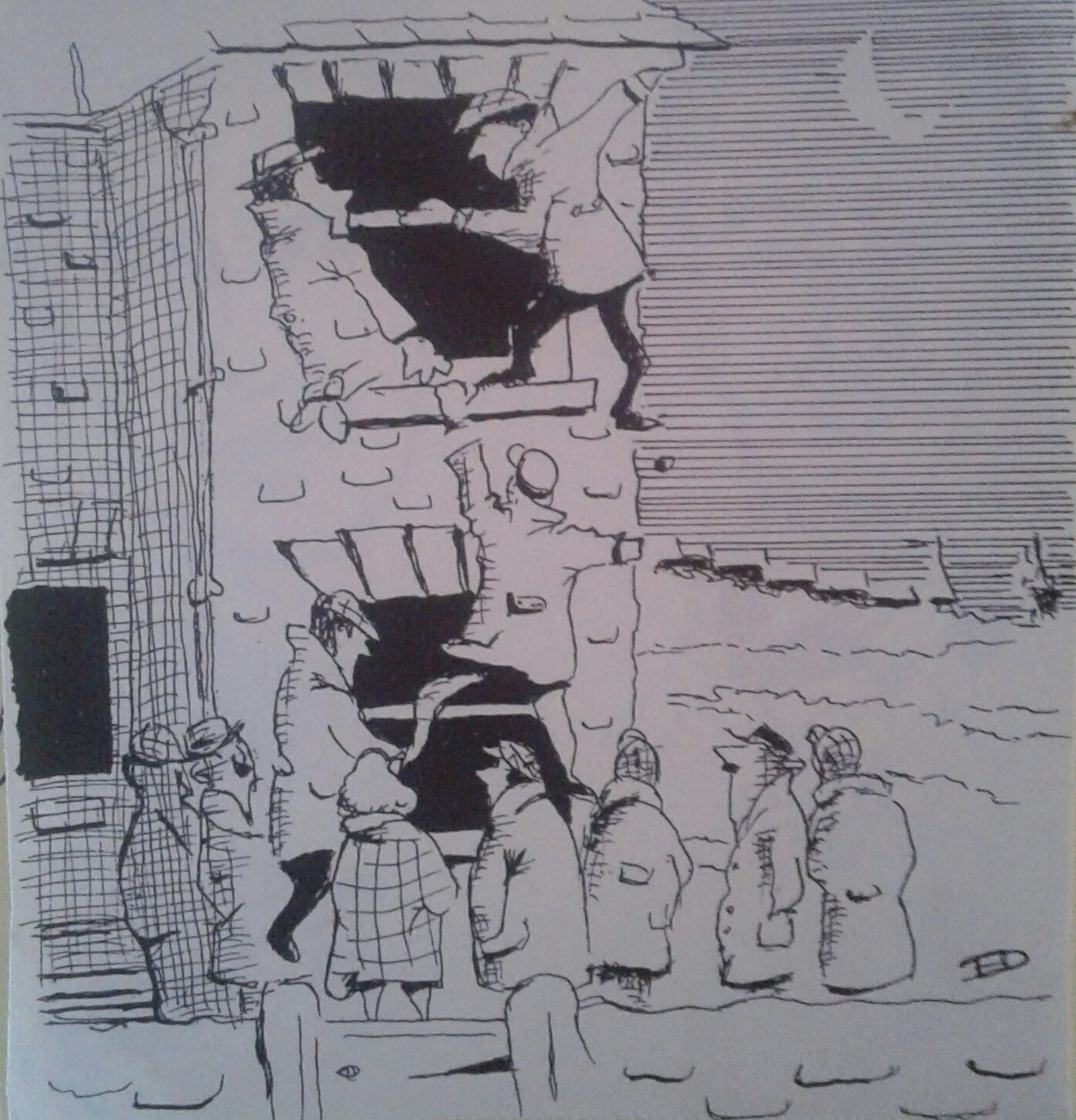
Miss Dolores Vale of Ipswich inadvertently became the first Page 3 girl in January, 1941, when she neglected to completely cover her bedroom window with that week’s Black‘Un. It was reported that at least fifteen men fell for her, mainly due to the slippery windowsill.
A 1947 tragedy almost signalled the end for the football paper, as avid Black’Un reader Peter Druid was killed in his back garden in Chepstow by the Cardiff to London Express after the train driver mistook the Black’Un he was reading for the entrance to the Severn Tunnel.
By 1949, the paper had reduced in size to a tabloid, and then further cuts necessitated it be produced as a pocket-sized edition. But, reports that readers were being struck by golf balls increased massively, especially if they had long, pointed noses. And thus, The Black’Un had reached its nineteenth hole.

