
 Posted by
EXTRACT FROM THE EBOOK AVAILABLE FROM AMAZON AND OTHER OUTLETS
The Clifton Jocks Railway
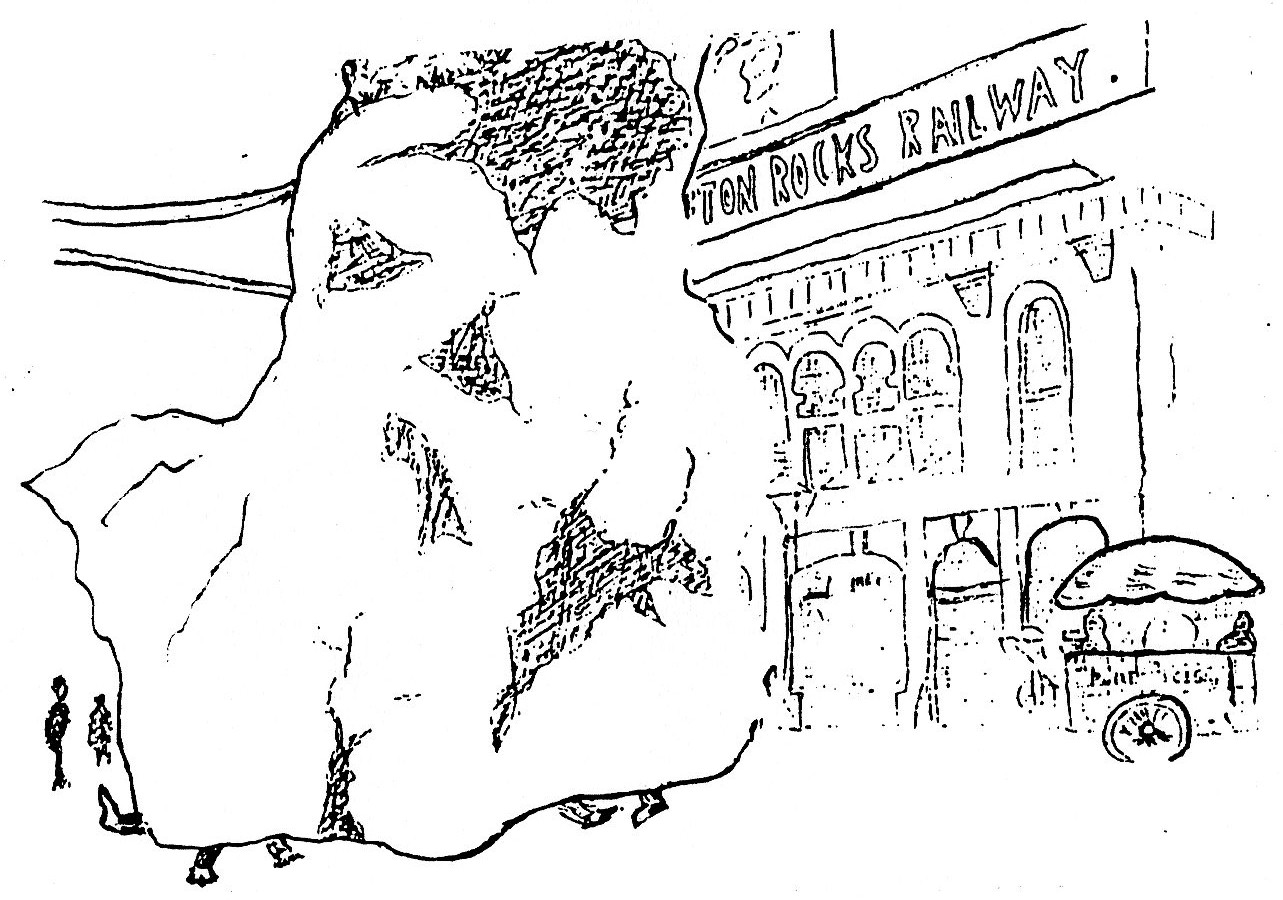
In 1893 a railway built exclusively for the use of stone-like objects opened in Bristol. It was called The Clifton Rocks Railway. In its first week of operation not a single rock used this new mode of transport. The owner, Agamemnon Farnsworth didn’t panic. He was made of stronger stuff (though not robust enough to be classified as a rock so he could become its first passenger).
It wasn’t until 1894 that it attracted its first paying passenger. Mr Freddie Yard, an habitual user of recreational drugs, was issued with a ticket for another trip on the Clifton Rocks Railway when he was stoned. It was then that he realised his mistake. He thought he was buying a ticket for The Clifton Rocks Reggae.
In 1942, despite a widespread leaflet drop in local quarries and the beach at Clevedon, no further passengers had used the railway. Then it was announced that Bristol’s own Hollywood film star, Cary Grant, was intending to bring his new bride, the heiress Barbara Hutton, to Clifton for their honeymoon. Shares in the ailing railway soared on the markets as publicity pics of the glamorous couple revealed that Hutton had so many rocks adorning her fingers that Mountain Rescue was put on standby whenever she had a manicure. Sadly, fate intervened. Some of the advertising leaflets must’ve drifted into the cosmos because a meteorite landed near the Clifton Rocks Railway ticket office. It was decided as a result of this never to attract rocks to their own railways ever again and the Clifton Rocks Railway closed.
An enterprising businessman called George Tremor then intervened. He considered it a shame, having all the infrastructure in place, not to reopen the railway but just give it a slight tweak. The Clifton Jocks Railway was thus born.
He argued that although there were considerably more rocks in the world than Scottish people, the Scots were more mobile. He then saw a newsreel at the Odeon of the Scottish defence being torn apart by Stanley Matthews at Wembley which appeared to contradict his argument.
The Highland Games Dancing Champion for 1949, Maggie McWeen opened the railway. This irked the Champion Caber Tosser Josh McTavish who thought he should have been bestowed with the honour. In revenge he terrorised passengers for the next two years with random acts of caber tossing. The only indication there might be an imminent strike was when a telegraph pole went missing in the area to be used as the caber. Bristolians were advised to report any incidents where it suddenly went silent if they were on the phone to anyone in Clifton. But as those from Knowle-West pointed out it usually went quiet anyway whenever they phoned someone in Clifton and informed them that they were from Knowle-West.
It was decided to make it difficult for him to lift cabers or anything resembling them, so all the poles in the Clifton area were greased. This was bad news for Wychechz Kilmanski of Goldney Road, BS8 as he became addicted to massage parlours thereafter.
It worked and it seemed the Clifton Jocks Railway would thereafter flourish, but a trio of incidents led to its downfall. The first occurred on Burns’ Night in 1950 when a passenger’s handbag was devoured by staff after they mistook it for a haggis. Then a Clifton lady was left in severe pain near the track for three days after she was struck by a Jocks Railway engine. Her anguished cries for help went unneeded because the nearby residents assumed it was the station-master playing his bagpipes. Finally, the tartan livery which adorned the carriages was considered responsible for a dramatic rise in obesity rates amongst train spotters, as they became addicted to shortcake biscuits.

